Control and Learning for Autonomous Systems: Safety, Resilience, and Performance

Full-Day Workshop at the IEEE Conference on Control Technology and Applications (CCTA) 2026

Vancouver · Aug 11, 2026 · 9:00 - 17:00

Overview

Autonomous systems are rapidly transforming safety-critical domains such as transportation, environmental monitoring, disaster response, and space exploration. However, enabling autonomous systems to operate safely, reliably, and with high performance in dynamic and uncertain environments remains a major challenge, particularly when real-time decision-making and limited onboard computational resources must be considered.

This workshop will explore recent advances in control and learning for autonomous systems, with an emphasis on safety-critical control, learning-enabled autonomy, resilient operation under uncertainty, and computationally efficient decision-making. Particular focus will be placed on the development of autonomous systems that can operate safely, resiliently, and with high performance in challenging real-world environments. Topics include, but are not limited to:
• Safety-critical and constraint-aware control
• Robust, adaptive, and resilient control methods
• Learning-enabled planning and control with formal guarantees
• Physics-informed and trustworthy AI for autonomous systems
• Human-centric and multi-agent autonomy
• Computationally efficient onboard planning and decision-making
• Autonomous aerospace, robotic, and space systems operating in uncertain environments

By bringing together researchers from control theory, aerospace engineering, robotics, and machine learning, the workshop aims to bridge the gap between theoretical advances and real-world deployment. Through invited talks and discussions, the workshop will identify emerging challenges and opportunities in developing safe, resilient, and high-performance autonomous systems.

Schedule

Time Speaker Title
Session 1: Advanced Control Methods for Safe and Reliable Systems
09:00 – 09:05 Prof. Pan Zhao Opening Remarks
09:05 – 10:00 Prof. Ilya Kolmanovsky Supervisory Reference Governor Schemes for Model Predictive Controllers
10:00 – 10:30 Coffee Break
10:30 – 11:10 Prof. Hugh H.T. Liu Physics-Inspired Intelligent Flight Control in the Era of Deep Learning
11:10 – 11:50 Prof. Jun Liu Physics-Informed Neural Certificates for Stability and Control with Formal Guarantees
11:50 – 12:30 Prof. Pan Zhao Safe and Performant Control of Uncertain Systems via Uncertainty Compensation
12:30 – 13:30 Lunch Break
Session 2: Intelligent and Trustworthy Autonomous Systems for Safety-Critical Applications
13:30 – 14:10 Prof. Youmin Zhang Making Autonomous Systems Smarter, Safer, More Reliable and More Resilient
14:10 – 14:50 Prof. Brett T. Lopez Unlocking Safe & Agile Autonomy: How Reliable Estimation is Yielding New Insights on Control of Autonomous Systems
14:50 – 15:30 Prof. Karen Leung Towards Trusted Human-Centric Autonomy
15:30 – 16:10 Prof. Jie Wang Toward Trustworthy AI-Enhanced Autonomy for Field Robots in Unstructured Environments
16:10 – 16:50 Prof. Robin Chhabra Learning to Plan in Orbit: The Next Frontier of Safe Space Manipulation for On-Orbit Servicing Missions
16:50 – 17:00 Prof. Pan Zhao Closing Remarks

Confirmed Speakers

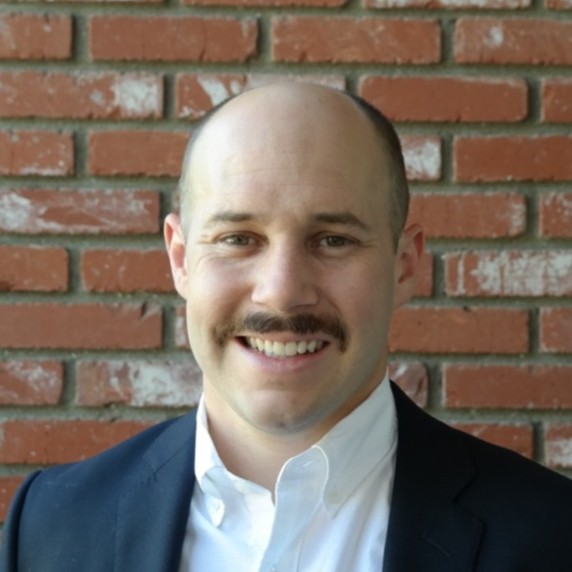
Ilya Kolmanovsky
Pierre T. Kabamba Collegiate
Professor of Aerospace Engineering
University of Michigan
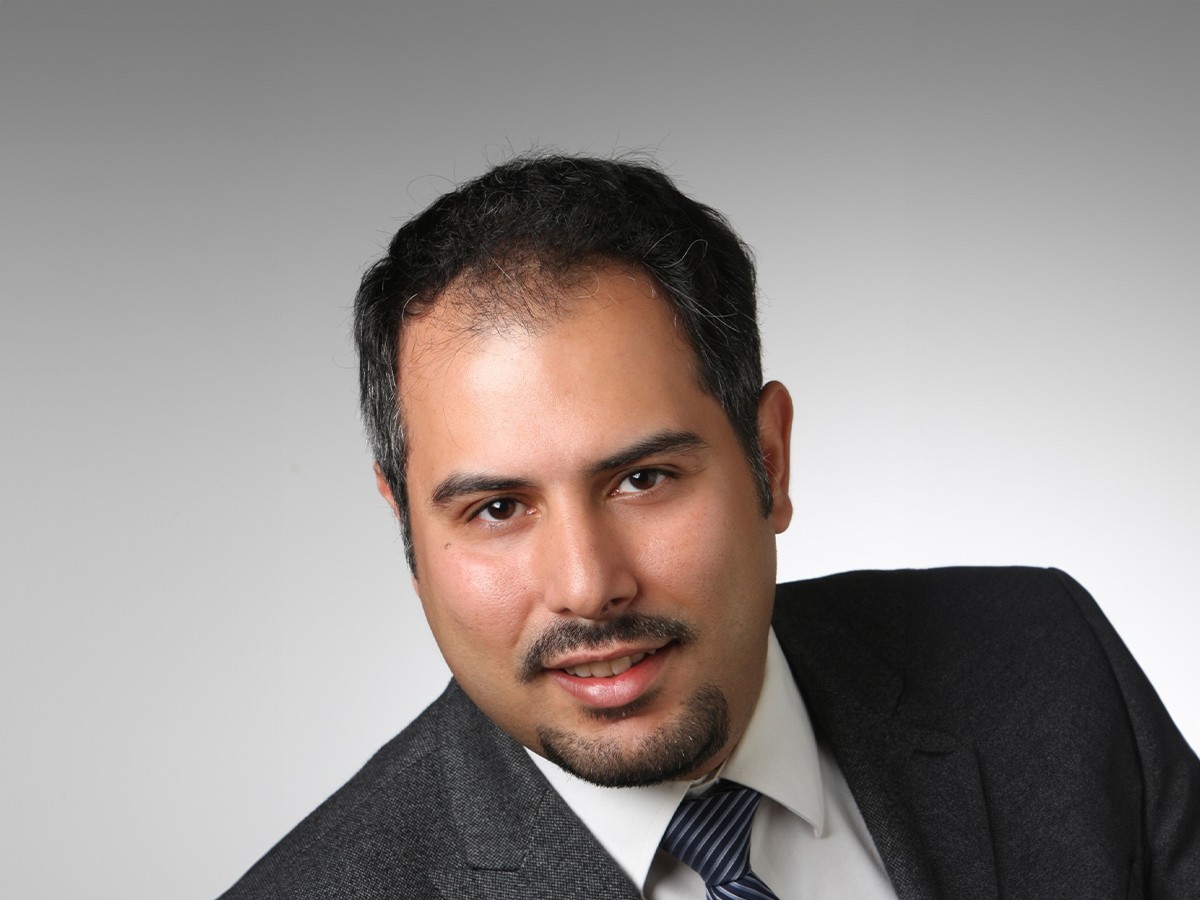
Youmin Zhang
Professor of Mechanical,
Industrial and Aerospace Engineering
Concordia University
Hugh H.T. Liu
Professor of Institute for
Aerospace Studies
University of Toronto
Jun Liu
Professor of Applied Mathematics
University of Waterloo
Brett Lopez
Assistant Professor of
Mechanical and Aerospace Engineering
University of California, Los Angeles
Karen Leung
Assistant Professor of
Aeronautics and Astronautics
University of Washington
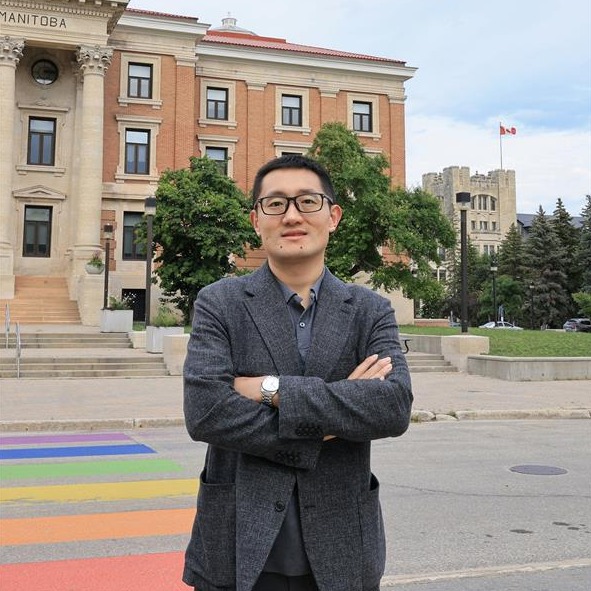
Jie Wang
Assistant Professor of
Mechanical Engineering
University of Manitoba
Robin Chhabra
Assistant Professor of Mechanical,
Industrial, and Mechatronics Engineering
Toronto Metropolitan University
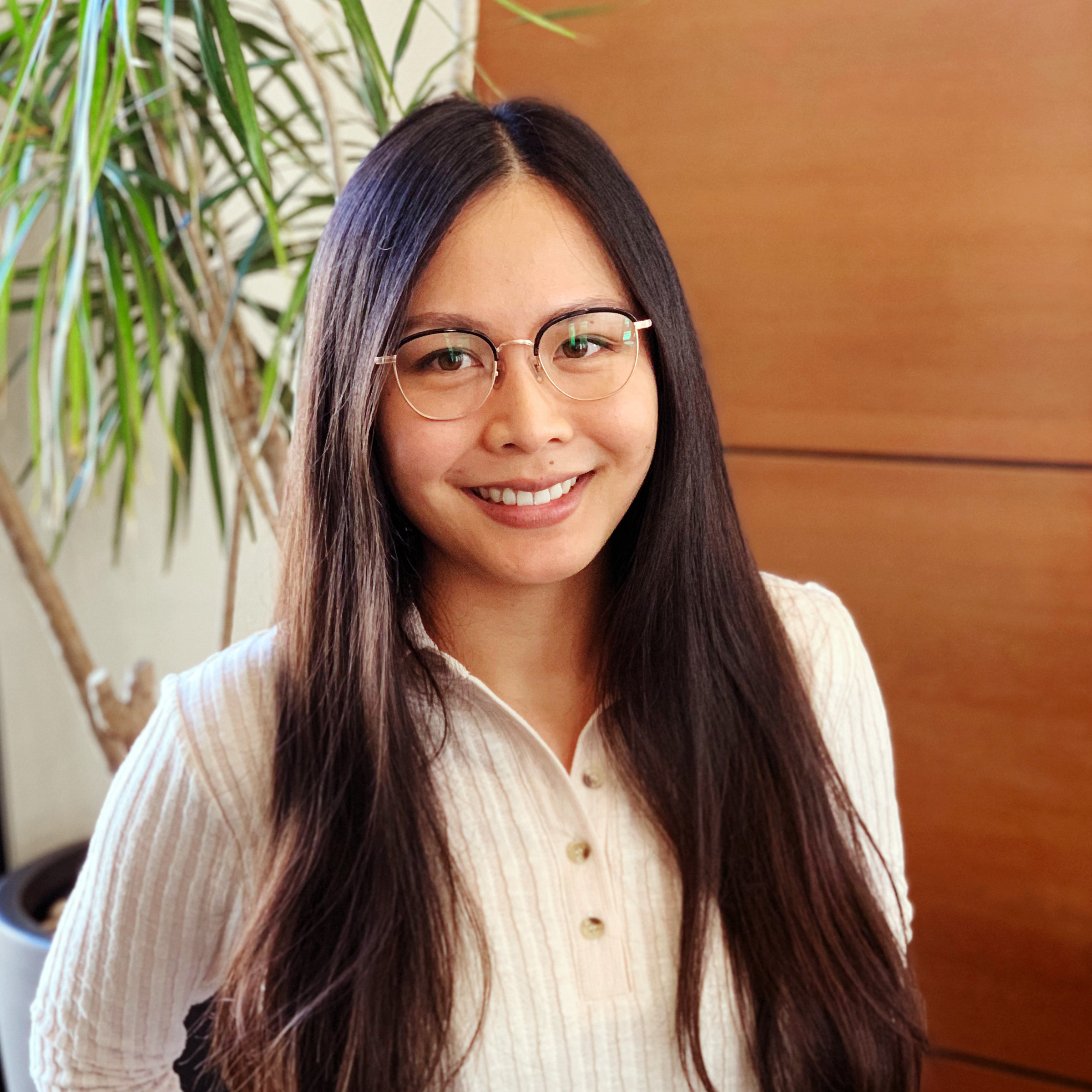
Pan Zhao
Assistant Professor of Aerospace
Engineering and Mechanics
University of Alabama

Organizers

Organizer Photo

Pan Zhao

University of Alabama

Talk Abstracts

Supervisory Reference Governor Schemes for Model Predictive Controllers

Speaker: Prof. Ilya Kolmanovsky

Reference governors (RGs) are add-on predictive safety supervision algorithms that monitor and modify, when necessary, commands passed to the nominal system to ensure that state and control constraints are satisfied and safety is preserved. This talk will discuss several recent developments in reference governor theory and applications for constrained control, including the use of reference governors as supervisory schemes for Model Predictive Controllers (MPC) to reduce computational time and enlarge the constrained closed-loop region of attraction. In particular, a Computational Governor (CG) will be introduced that maintains feasibility and bounds the suboptimality of MPC warm-start solutions by altering the reference command provided to the inexactly solved MPC problem. Another multi-fidelity RG/MPC scheme will also be presented in which the MPC problem is solved using a low-fidelity model and the solution is accepted or rejected by an RG employing a higher-fidelity model.

Physics-Inspired Intelligent Flight Control in the Era of Deep Learning

Speaker: Prof. Hugh H.T. Liu

The rapid technological advancement in UAVs, robotics, and AI has created significant opportunities for emerging applications, while also introducing new challenges regarding the trustworthiness of intelligent systems in safety-critical aviation domains. This talk discusses learning-based intelligent flight control from the perspective of safe and reliable autonomy. After a brief overview of AI in UAV control, the presentation focuses on two major themes: safe-learning and self-supervised learning, and deep learning with hard constraints. The objective is to develop model-based, learning-enhanced flight control strategies that leverage recent AI advances while preserving the safety and validation advantages of classical control design. Recent work will be illustrated through a case study involving slung payload control with variable-length cables.

Physics-Informed Neural Certificates for Stability and Control with Formal Guarantees

Speaker: Prof. Jun Liu

Neural networks are universal approximators, yet learned models rarely come with rigorous guarantees, and existing statistical learning bounds are often overly conservative and insufficient for certifying correctness of specific solutions. This talk presents a formal verification framework that produces a posteriori error estimates for neural network solutions of partial differential equations arising in systems and control. The framework connects machine learning with rigorous control theory by transforming physics-informed neural models into certifiable computational tools. In particular, the talk examines PDE characterizations arising in stability and contraction analysis, control synthesis, and estimation for nonlinear dynamical systems. By combining formal verification tools with theoretically derived estimates, the framework rigorously bounds approximation errors and translates them into provable guarantees of stability and safety, enabling verification of regions of attraction, construction of provably correct stabilizing neural feedback controllers, and development of neural state estimators with rigorous error bounds.

Safe and Performant Control of Uncertain Systems via Uncertainty Compensation

Speaker: Prof. Pan Zhao

Real-world systems often operate under safety constraints in uncertain environments subject to unknown parameters, unmodeled dynamics, and external disturbances. This talk presents recent advances in safe and performant control of uncertain systems through a holistic integration of uncertainty estimation and compensation (UEC) with constraint-aware control schemes including Model Predictive Control (MPC), reference governors, and control barrier functions. The presentation will also introduce an adaptive parameter-varying framework that can potentially be applied to the control of high-dimensional nonlinear systems subject to large uncertainties.

Making Autonomous Systems Smarter, Safer, More Reliable and More Resilient

Speaker: Prof. Youmin Zhang

Although Fault Detection and Diagnosis (FDD) and Fault-Tolerant Control (FTC) have been extensively studied for decades, recent catastrophic failures such as the Boeing 737 MAX8 crashes have highlighted the continuing need for safer and more resilient autonomous systems. Meanwhile, UAVs, autonomous cars, robots, and other autonomous vehicles are experiencing rapid growth in practical applications. This talk provides an overview of recent developments in making autonomous systems smarter, safer, more reliable, and more resilient through the integration of Guidance, Navigation, and Control (GNC) with remote sensing techniques. The presentation will also discuss recent work on autonomous control, fault detection and diagnosis, fault-tolerant control, and fault-tolerant cooperative control for autonomous systems operating under physical faults and cyber-attacks, with applications including forest-fire monitoring and smart grids.

Unlocking Safe & Agile Autonomy: How Reliable Estimation is Yielding New Insights on Control of Autonomous Systems

Speaker: Prof. Brett Lopez

The ultimate objective for autonomous systems is safe and agile operation anytime and anywhere, yet reliable deployment in previously unseen real-world environments remains difficult due to implicit environmental assumptions and ad hoc subsystem design. This talk presents recent progress toward achieving agile autonomy for safe deployment in perceptually challenging and unstructured environments. In particular, the presentation discusses how advances in reliable odometry estimation are enabling new developments in nonlinear control, trajectory planning, and high-level decision-making for autonomous systems operating in challenging conditions. Results from extensive field testing across DARPA and Army Research Laboratory projects involving underground and forest environments on aerial, wheeled, and legged robotic platforms will be presented, along with lessons learned and future research directions.

Towards Trusted Human-Centric Autonomy

Speaker: Prof. Karen Leung

Autonomous robots are becoming increasingly common in everyday environments, yet building systems that can safely and fluently interact with humans in a trustworthy manner remains a major challenge. This talk discusses how human interaction data can be leveraged to learn models that describe human behavior and improve the safety and fluency of robot planning and control. The presentation will cover recent work combining data-driven methods with control-theoretic models to learn interpretable models of safe human-robot vehicle interactions, methods for modeling and inferring multi-agent responsibility for collision avoidance, and deep generative models for robot planning capable of incorporating learned interaction behaviors to produce safe and efficient autonomous actions.

Toward Trustworthy AI-Enhanced Autonomy for Field Robots in Unstructured Environments

Speaker: Prof. Jie Wang

This talk focuses on trustworthy AI-enhanced autonomy for mobile robots and autonomous vehicles operating in uncertain, dynamic, and unstructured environments. The central theme is that high-performance autonomy should rely not only on learning, but also on principled integration of data-driven adaptation, physics-based modeling, uncertainty awareness, formal safety mechanisms, and real-world validation. The presentation will discuss Gaussian-process-enhanced model predictive control methods for improved dynamics prediction and safer decision-making under constraints, with representative applications including off-road mobile robot path tracking and mixed human-autonomous vehicle platooning. Ongoing work on agricultural robots, cold-region field robots, and safe crowd navigation will also be discussed, including uncertainty-aware augmentation, adaptive speed scheduling, and safety filtering for robust and field-ready autonomy.

Learning to Plan in Orbit: The Next Frontier of Safe Space Manipulation for On-Orbit Servicing Missions

Speaker: Prof. Robin Chhabra

This talk explores learning-enabled planning and control for On-Orbit Servicing (OOS) missions in which autonomous space manipulators must operate under uncertainty, limited sensing, and strict safety constraints. The presentation introduces a unified framework integrating geometric control on matrix Lie groups with learning-based planning to enable safe, robust, and computationally efficient orbital manipulation. The framework leverages globally valid motion representations to avoid singularities while incorporating perception-aware uncertainty into planning and decision-making through Twin-Delayed Deep Deterministic (TD3) policy gradient methods. Simulation results demonstrating the potential of these techniques for next-generation autonomous space operations will also be presented.

Speaker Bios

Ilya Kolmanovsky

Professor Ilya V. Kolmanovsky received his Ph.D. degree in Aerospace Engineering in 1995, his M.S. degree in Aerospace Engineering in 1993, and his M.A. degree in Mathematics in 1995, all from the University of Michigan, Ann Arbor. He is presently the Pierre T. Kabamba Collegiate Professor of Aerospace Engineering at the University of Michigan. Before joining the University of Michigan in 2010, he spent nearly 15 years with Ford Research and Advanced Engineering in Dearborn, Michigan. Prof. Kolmanovsky is a Fellow of IEEE, IFAC, and the U.S. National Academy of Inventors, and has been elected as a member of the U.S. National Academy of Engineering. He currently serves as the Editor-in-Chief of IEEE Transactions on Control Systems Technology. His research interests include constrained control and the control of aerospace and automotive systems.

Youmin Zhang

Dr. Youmin Zhang is currently a Professor in the Department of Mechanical, Industrial and Aerospace Engineering and the Concordia Institute of Aerospace Design and Innovation (CIADI) at Concordia University in Montreal, Canada. His research interests include monitoring, diagnosis, and physical fault/cyber-attack tolerant/resilient control techniques with applications to autonomous systems, smart grids, and forest-fire detection and protection under the framework of cyber-physical systems. Prof. Zhang has published 12 books and over 700 journal and conference papers, with more than 36,000 citations and an h-index of 94 according to Google Scholar. His work has been ranked globally among the top specialties in aircraft systems, fault tolerance, and unmanned aerial vehicles by ScholarGPS. He has consistently appeared in Stanford’s World’s Top 2% Scientists list and was selected as a 2025 Highly Cited Researcher by Clarivate. He is a Fellow of IEEE and the Canadian Society of Mechanical Engineering (CSME), and previously served as President of the International Society of Intelligent Unmanned Systems. He has also held editorial leadership roles for numerous journals and has served extensively in conference organization for robotics, autonomous systems, and control communities.

Hugh H.T. Liu

Hugh H.T. Liu is a Professor at the University of Toronto Institute for Aerospace Studies, where he has served on the faculty since 2000. His research interests include autonomous unmanned systems, cooperative and formation control, fault-tolerant control, active control for advanced aircraft systems, and integrated modeling and simulation. Dr. Liu currently serves as an Associate Editor of the AIAA Journal of Guidance, Control, and Dynamics and the Canadian Aeronautics and Space Journal. He is a Fellow of the Canadian Academy of Engineering, Engineering Institute of Canada, Canadian Society of Mechanical Engineers, and the Canadian Aeronautics and Space Institute (CASI), and is also an Associate Fellow of AIAA. In 2021, Professor Liu received the CASI McCurdy Award in recognition of his outstanding achievements in aeronautics and space research.

Jun Liu

Jun Liu received the B.S. degree in Applied Mathematics from Shanghai Jiao-Tong University in 2002, the M.S. degree in Mathematics from Peking University in 2005, and the Ph.D. degree in Applied Mathematics from the University of Waterloo in 2011. Following an NSERC Postdoctoral Fellowship in Control and Dynamical Systems at Caltech, he became a Lecturer in Control and Systems Engineering at the University of Sheffield in 2012. He joined the Faculty of Mathematics at the University of Waterloo in 2015, where he is currently Professor of Applied Mathematics, Director of the Hybrid Systems Laboratory, and Associate Director of the Waterloo Data & Artificial Intelligence Institute. His research interests include hybrid systems and control, formal methods, optimization, and learning theory, with applications in robotics and cyber-physical systems. Dr. Liu has received numerous honors including a Marie-Curie Career Integration Grant, Canada Research Chairs, an Early Researcher Award, and the CAIMS/PIMS Early Career Award. He is a senior member of IEEE and has served in leadership roles for SIAM and IEEE technical committees and journals.

Brett Lopez

Brett Lopez is an Assistant Professor in the Mechanical and Aerospace Engineering Department at the University of California, Los Angeles (UCLA). He directs the VECTR Laboratory, which focuses on developing and deploying agile autonomous systems for safety-critical applications. He earned his Ph.D. and S.M. degrees from MIT in autonomous systems and control theory, his B.S. in Aerospace Engineering from UCLA, and his A.S. in Mathematics from El Camino College. Before joining UCLA, he was a postdoctoral fellow at NASA-JPL, where he served as the Aerial Autonomy Lead for the DARPA Subterranean Challenge. Prof. Lopez has also contributed to DARPA’s Fast Lightweight Autonomy program and currently serves as a PI for ARL’s Scalable, Adaptive, and Resilient Autonomy program. He has received the UCLA Faculty Career Development Award, the UCLA MAE Outstanding Teaching Award, and the NSF Graduate Research Fellowship. His research interests include localization and mapping, real-time trajectory planning, nonlinear control and estimation, multi-agent systems, and field robotics.

Karen Leung

Karen Leung is an Assistant Professor in the William E. Boeing Department of Aeronautics and Astronautics at the University of Washington, where she directs the Control and Trustworthy Robotics Laboratory (CTRL Lab). Her research focuses on the development of safe, intelligent, and trustworthy autonomous systems operating in safety-critical and human-interactive environments. Prior to joining the University of Washington, she was a Research Scientist in NVIDIA’s Autonomous Vehicle Research Group, where she worked on autonomous driving technologies. She received her Ph.D. and M.S. degrees in Aeronautics and Astronautics from Stanford University, and dual undergraduate degrees in engineering and mathematics from the University of Sydney. Prof. Leung has received several honors including the NSF CAREER Award, the UW–Amazon Science Hub Faculty Research Award, the Qualcomm Innovation Fellowship, and the William F. Ballhaus Prize for her doctoral thesis.

Jie Wang

Dr. Jie (Jay) Wang is an Assistant Professor in the Department of Mechanical Engineering at the University of Manitoba and Director of the Robot Autonomy Lab. His research focuses on trustworthy AI-enhanced autonomy for mobile robots and autonomous vehicles operating in unstructured and uncertain environments. His work integrates learning-based methods with physics-based modeling and control to improve adaptability and performance while preserving robustness, interpretability, and safety. His current research targets field-ready autonomy for agricultural and cold-region/Arctic robots, and also includes assistive robotic systems. Dr. Wang holds an NSERC Discovery Grant and additional provincial and university funding supporting safe autonomy for field robots. His work has been recognized with a Highly Cited Paper Award and a Top Cited Article Award from the Journal of Field Robotics.

Robin Chhabra

Robin Chhabra, Ph.D., P.Eng. (SMIEEE, MAIAA), is an Assistant Professor in the Department of Mechanical, Industrial, and Mechatronics Engineering at Toronto Metropolitan University, where he directs the ELIXIR Lab (Embodied Learning and Intelligence for eXploration and Innovative soft Robotics). He previously held a Tier-II Canada Research Chair in Autonomous Space Robotics and Mechatronics at Carleton University. Dr. Chhabra received his M.A.Sc. and Ph.D. degrees from the University of Toronto. Prior to academia, he conducted applied research at MDA Space, contributing to guidance, navigation, and control systems for space robotics missions. His research lies at the intersection of geometric mechanics, nonlinear control, and embodied artificial intelligence, with applications to space robotics, multi-agent systems, and autonomous manipulation. He currently serves as an Associate Editor for IEEE Robotics and Automation Letters (RA-L).

Pan Zhao

Dr. Pan Zhao is currently an Assistant Professor in the Department of Aerospace Engineering and Mechanics at the University of Alabama. He received his Ph.D. in Mechanical Engineering from the University of British Columbia in 2018, and his M.Eng. and B.Eng. degrees from Beihang University in 2012 and 2009, respectively. Prior to joining the University of Alabama, he was a Postdoctoral Researcher at the University of Illinois Urbana-Champaign from 2018 to 2023. He is a recipient of the NSF CAREER Award (2026). Dr. Zhao’s research focuses on developing control and decision-making algorithms for autonomous systems to ensure safe and efficient operation in dynamic and uncertain environments. He is also interested in the development of aerial robotic systems for applications in emergency response, construction, and agriculture.